
How to combine clothing colours? Find out what the colour wheel is and how to use it, learn simple rules for combining colours and avoid fashion mistakes.
Anyone who wants to look good has probably wondered how to combine colours in clothes so that they match and create a coherent combination. Some people rely on intuition and automatically create colour combinations that look good. Others need to figure it out. Regardless of which group you belong to, it's worth learning the basic methods of combining colours. Combining colours can be very simple for everyone, you just need to learn a few rules.
Colour palette – how to combine colours?
How to combine colours to always have a coherent and successful outfit? And how to do it quickly, without wasting half a day trying on all your clothes and checking how specific combinations look? It's definitely worth getting familiar with the colour wheel. The colour wheel is a graphic model showing the formation and mixing of colours. The saturation level of a colour depends on the distance from the centre. It's a very helpful, illustrative model that has been known for a long time. It's worth getting to know its advantages better. This will be useful not only for those interested in successful colour combinations in fashion, but for everyone who wants to know how to correctly create successful colour combinations in other fields as well, e.g. in interior design.
Colour combinations – what's worth remembering?
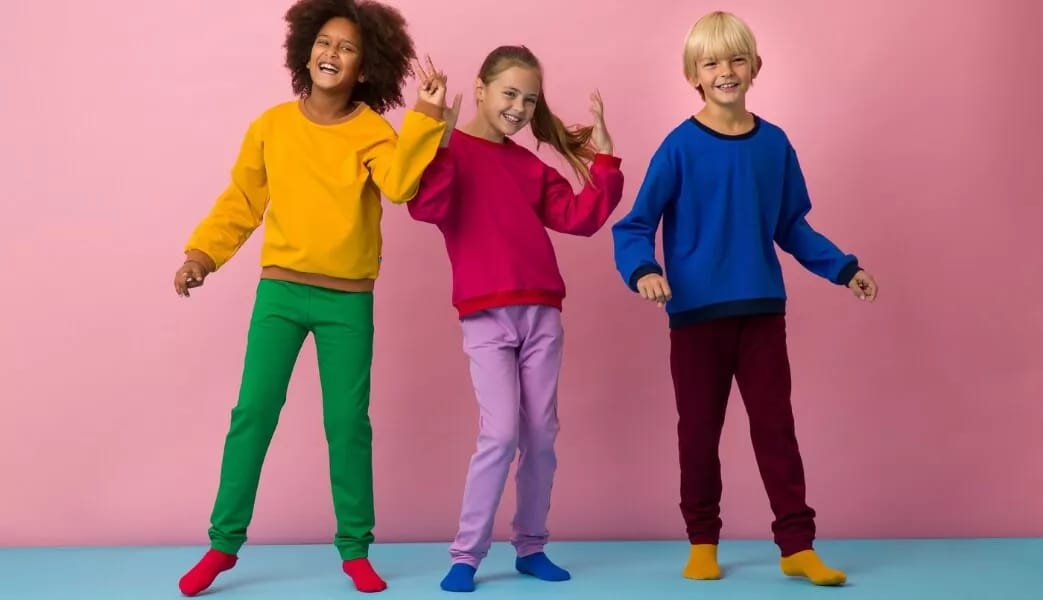
Primary colours are those that cannot be obtained from other colours, while secondary colours are created by mixing two primary colours, e.g. blue with yellow, which gives green. The colour wheel contains 12 colours, including primary colours, secondary colours and 6 combinations of primary colours with secondary ones. This wheel is an excellent colour guide for how to combine colours in clothing. It greatly facilitates creating good combinations and it's worth using it even every day. Over time, however, you'll reach for it less and less often, because the correct and most common colour combinations that go well together will become fixed in your memory and it will no longer be necessary.
Clothing – how to combine colours, methods for successful colour combinations

Choosing complementary colours, the complementary method
- This involves combining colours that lie opposite each other on the colour wheel. Such combinations are contrasting and you should be careful with them. You can choose one of the colours as dominant and use the other as a colour accent. A variant of this method is combining the main colour with two others located on either side of the complementary colour. Although this sounds complicated, if we refer back to the colour wheel, it becomes very easy to understand.
Colour triad
- Combining three colours that are located on the colour wheel at an equal distance from each other (if you were to divide the wheel into 3 equal parts, these colours would be on the dividing lines). In this case, one colour should dominate, and two should play a complementary role. If this combination is already too strong for someone, there's no need to reach for its variant, the tetrad. This is a combination of two pairs of complementary colours, which can be found by dividing the wheel into 4 equal parts, similarly to the triad.
Monochromatic method
- A method of combining colours favoured by conservative people, involving combining a pure colour (the one located on the outside of the colour wheel) with its dark and light shades (colours located deeper in the wheel, along one line from the outside to the inside). This is a simple and calm combination for everyone
Harmonious, analogous, related colours method
- An easy-to-use method involving choosing a main colour and two adjacent to it. Colours located next to each other on the wheel won't create a contrasting outfit, but they will always go well together. A good, simple and quick combination.
It's also worth remembering that colours differ in saturation, which depends on the amount of black, grey or white. They can be pastel, muted, etc. We also distinguish warm and cool colours. Warm colours include, for example, red or yellow, while cool colours include blue and green. The basic colour range contains warm and cool colours. Gold pairs perfectly with warm colours, and silver with cool ones. Combining colours from the same group, with the same temperature, works best.
Don't forget what suits you: Colour analysis - which clothing colour suits your beauty type?
What about black and white?

White and black are basic, timeless colours and cannot be forgotten when putting together outfits. They are primary colours and can complement any colour. White is the result of combining primary colours, i.e. green, red and blue, and is the lightest colour. Black, on the other hand, is the darkest and is the result of combining yellow, crimson and turquoise. However, if you look deeper into the issue of colours, black, which absorbs colours and doesn't reflect them, isn't a colour in itself. White, however, is. Colour perception is a psychological impression that is subjective. Grey, black and white can be treated as a base for other colours. Grey, as a combination of complementary colours, i.e. black and white, is also universal.
Quick and fashionable colour combinations and their benefits
Successful colour combinations and knowledge of how to combine colours mean saving time, but also ecological and economic benefits. Giving up random, unplanned clothing purchases in colours that won't match anything is an important advantage. Meanwhile, knowing how to combine colours in clothing allows you to keep up with current trends straight from the catwalks and makes it easier to create fashionable, successful outfits in the season's hottest colours. It also means you can use the clothes you already own in numerous ways.
Other posts from this category

.jpg)








Get EUR 10 off your order over EUR 100
By clicking „Sign up” I voluntarily agree to subscribe to the newsletter in order to receive marketing information, including promotions, discount codes, and the latest MyBasic products. I understand that I can withdraw my consent at any time. The controller of your personal data is MyBasic Sp. z o.o., ul. Rzędziana 11, 05-080 Izabelin B, KRS: 0000776465, NIP: 1182190916, REGON: 382808588, BDO: 000540511.