How to care for clothing?
Check what materials your favourite styles are made from.
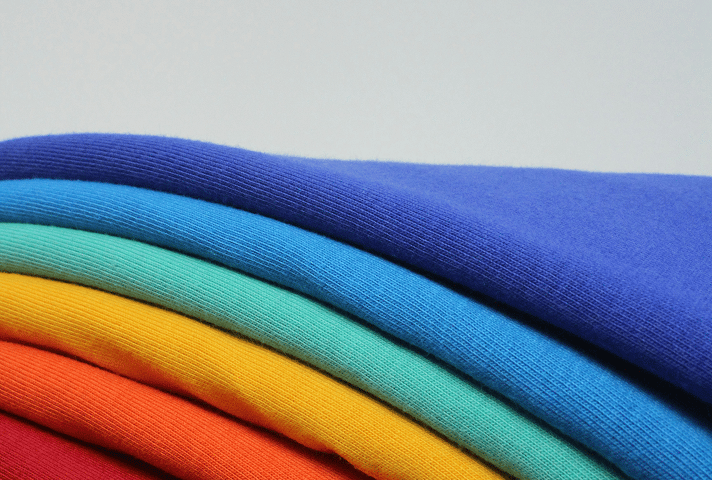
How to care for MyBasic clothes
A well-made piece of clothing can last for years — as long as you know how to look after it. Each of our fabrics has its own character and a few simple rules that will help it keep its softness, colour and shape. Find out how to wash, dry and iron your MyBasic clothes so they serve you for as long as possible.
Cotton knit
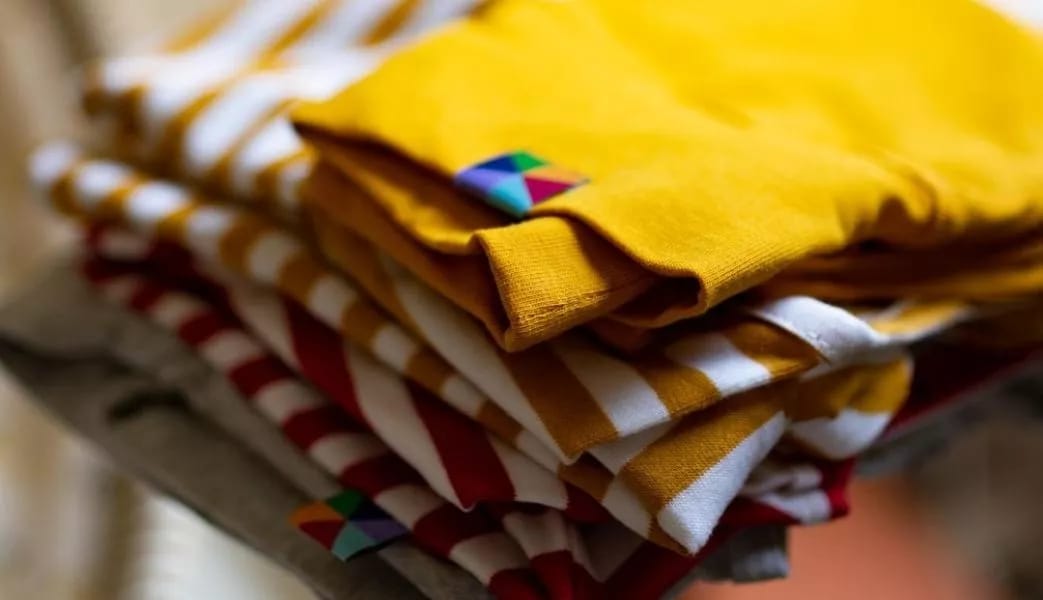
How to care for cotton knit products?
- Wash at a max. temperature of 40°C.
- For lighter dirt, we suggest a temperature of 30°C.
- Spin at a maximum of 600-800 rpm.
- Wash with similar colours.
- Wash zip-up or snap-button clothes fastened.
- Wash and iron inside out.
- Iron at a max. temperature of 150°C.
- Do not tumble dry or dry in direct sunlight.
- Do not use bleach.
- Do not dry clean.
- Do not soak.
- Remember that cotton clothing may naturally shrink by up to 5% when washed - this is a completely natural process.
- Try special colour-catching laundry sheets. Thanks to them, the colours will stay beautiful and vivid for even longer :)
Muslin
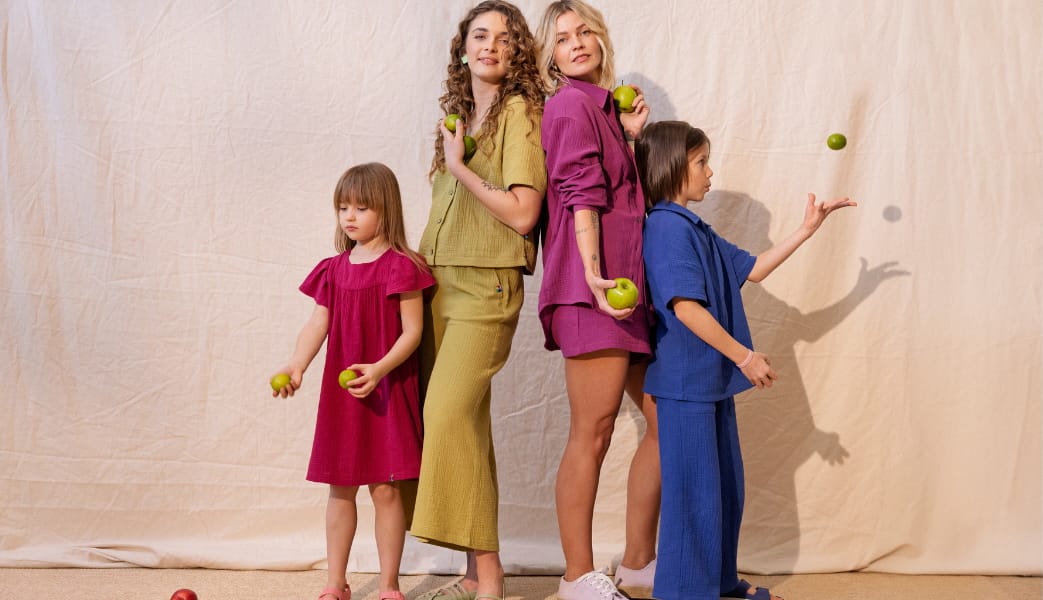
How to care for muslin clothing?
- Wash at a maximum temperature of 30° C.
- Spin at a maximum of 600 rpm.
- Wash with similar colours.
- Wash and iron inside out.
- Iron at a maximum temperature of 110° C.
- Iron using steam and without pressing the fabric too hard with the iron - this will help preserve the muslin's structure.
- Do not tumble dry or dry in the sun.
- Do not use bleach.
- Do not dry clean.
- Do not soak.
- Remember that muslin clothing may shrink by 5%-10% during washing - this is a completely natural process.
- Try special colour-catching laundry sheets. Thanks to them, the colours will stay beautiful and vibrant for even longer :)
Bamboo viscose

How to care for bamboo viscose products?
- Wash at a max. temperature of 30°C, preferably on a short programme for delicate fabrics and with a mild detergent.
- Spin at the lowest possible speed, max. 600 rpm.
- Wash with similar colours.
- Wash inside out.
- We recommend washing bamboo clothes in a protective cotton laundry bag.
- Iron at a temperature of 90-120°C.
- We recommend ironing bamboo fabric through a cloth or on the inside - ironing on the right side may make the fabric shiny.
- Wash zip-up or snap-button clothes fastened.
- Remember that using fabric softener negatively affects bamboo fibres and weakens them.
- Do not tumble dry or dry in direct sunlight.
- Do not use bleach.
- Do not dry clean.
- Do not soak.
- Do not delay taking bamboo clothes out of the washing machine and hanging them up, to avoid extra creases in the fabric.
- After washing, dry flat or hang vertically on a hanger (remember, however, that bamboo fabric may leave marks and become shiny where it touches a line, drying rack rod or hanger – this is a natural property of the fabric).
- The appearance of fuzz/light pilling on the fabric is a natural phenomenon for delicate bamboo viscose.
- Remember that viscose clothing may naturally shrink by up to 5% when washed - this is a completely natural process.
- Try special colour-catching laundry sheets. Thanks to them, the colours will stay beautiful and vivid for even longer :)
Merino wool and cashmere
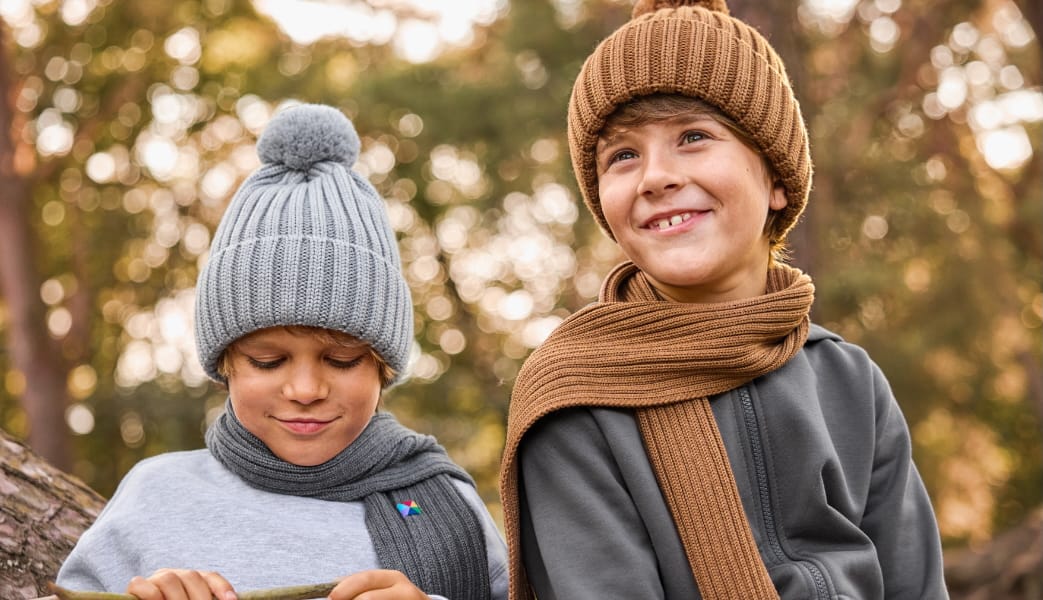
How to care for merino wool and cashmere accessories?
- Merino wool has natural protection against dirt - an outer protective layer that prevents stains from being absorbed, so it is recommended mainly to air it out.
- Thanks to its properties, merino wool products need to be washed very rarely.
- We recommend hand washing or washing in a machine using special wool programmes (with reduced spinning up to 200 rpm or no spinning).
- Do not soak.
- Wash at a max. temperature of 30°C.
- Do not wring, gently press out excess water.
- Use only products designed for washing wool.
- Products are best dried flat or with filling inside to maintain their shape.
Extrafine merino wool

How to care for extrafine merino wool clothing?
Washing
- Less is more - merino has antibacterial properties and doesn't easily absorb odours, so it doesn't need to be washed after every use.
- Airing instead of washing - it's often enough to air the garment in a well-ventilated place.
- Do not soak - and if necessary, do it briefly and in lukewarm water.
- Wool programme / hand washing - if washing is necessary, only use special wool washing programmes in the machine or hand wash in lukewarm water (approx. 30°C).
- Do not spin - merino wool does not like intensive spinning or wringing – just press out excess water.
- Special detergents - use liquids designed for washing wool, avoid powders and liquids with enzymes or bleach. Do not use rinse aids.
- Washing machine contents - pay special attention that no zips, hook-and-loop fasteners or stiff materials that could damage the wool fibres are in the machine together with delicate merino wool products.
Drying
- Dry flat – it's best to lay the garment on a towel or a horizontal drying rack so that it doesn't stretch under its own weight.
- Avoid radiators and sunlight – high temperatures can damage the fibres.
Storage
- Folding instead of hanging – extrafine wool is delicate and may stretch on a hanger. Fold clothes and keep them on a shelf.
- Moth protection – use lavender or cedar sachets or special wardrobe inserts.
Everyday care
- Removing bobbles - fuzz appearing on the surface of the knit is a natural phenomenon for wool - if small bobbles appear, remove them with a widely available fabric shaver.
- Ironing - thanks to their elasticity, merino wool clothes easily adapt to the body, so often just wearing them for a while is enough for them to return to their proper shape. If you need to iron, do it through a protective cloth to prevent unsightly shine. Set a low temperature for wool (high temperature can scorch or felt the fibres) and apply gentle pressure - press the iron lightly. You can also hold the iron a few cm above the fabric and release only steam, which works like a steamer. Only iron the garment when dry and avoid stretching the fabric while ironing - this can easily deform the shape.
- Steaming - this is a good and recommended way to quickly refresh and smooth clothing without frequent washing, but special care must be taken to do it correctly:
- Use a garment steamer or an iron with a vertical steam function.
- Hold the device a few centimetres from the garment - do not press it against the fabric.
- You can steam clothes from both the outside and the inside.
- Hang the garment on a hanger (this is fine during steaming) so the steam can work freely.
- Avoid holding steam in one spot for too long.
- Do not use steam that's too hot very close to the fabric – the fibres may shrink.
Softshell with membrane
.webp)
How to care for softshell products with membrane?
- Wash at a max. temperature of 40°C.
- Spin at a maximum of 600 rpm.
- Wash with similar colours in an automatic washing machine.
- Do not iron.
- Do not dry clean.
- Do not bleach.
- Do not tumble dry.
- Dry vertically.
- Do not soak.
- Do not use strong detergents, fabric softeners or rinse aids, to avoid damaging the delicate structure of the fabric. Choose a suitable liquid detergent instead of powder.
- Impregnate the clean garment with a mild dedicated product, so that washing does not damage the fabric and membrane.
Summer hats made of cotton and muslin fabric?
How to care for summer hats made of cotton fabric and muslin?
- Wash at a max. temperature of 30°C.
- Spin at a maximum of 600 rpm (hats with a stiffened peak at lower speeds of 200-400).
- Wash and iron with similar colours.
- Wash and iron inside out.
- Iron at a max. temperature of 110°C.
- Do not tumble dry or dry in direct sunlight.
- Do not wring.
- Do not use bleach.
- Do not dry clean.
- Do not soak.
Linen
.jpg)
How to care for linen products?
- Wash at a max. temperature of 40°C; for lighter dirt, choose 30°C.
- Spin at a maximum of 800 rpm.
- Wash with similar colours.
- Wash and iron inside out.
- Iron at a temperature of up to 200°C.
- You can iron a slightly damp item.
- Iron using steam, spray with water, or iron through a damp cloth.
- Do not tumble dry or dry in direct sunlight.
- Do not use bleach.
- You can dry clean.
- Dry hanging or flat.
- Remember that linen clothing may naturally shrink by up to 5-7% when washed - this is a completely natural process.
Cotton jumpers

How to care for cotton sweaters?
- Wash in the washing machine on a gentle programme at a maximum temperature of 30° C.
- Spin at a maximum of 800 rpm.
- Wash with similar colours.
- Wash and iron inside out.
- Iron at a maximum temperature of 110° C.
- Iron using steam and without pressing too hard with the iron.
- Do not tumble dry or dry in the sun.
- Do not use bleach; use colour-protecting detergents.
- Do not dry clean.
- Remember that cotton clothing may shrink by up to 5% during washing - this is a completely natural process.
Certificates

MyBasic clothing is made from the highest quality materials, certified with Oeko-Tex Standard 100, the world's leading safety label for textile products. Materials awarded this label are free from harmful substances in concentrations that could negatively affect human health, including pesticides, chlorophenols, formaldehyde, allergenic dyes, banned azo dyes and extractable heavy metals.
In addition, the knitted fabrics from which our clothes are made hold "Human-Friendly" and "Child-Safe" certificates.