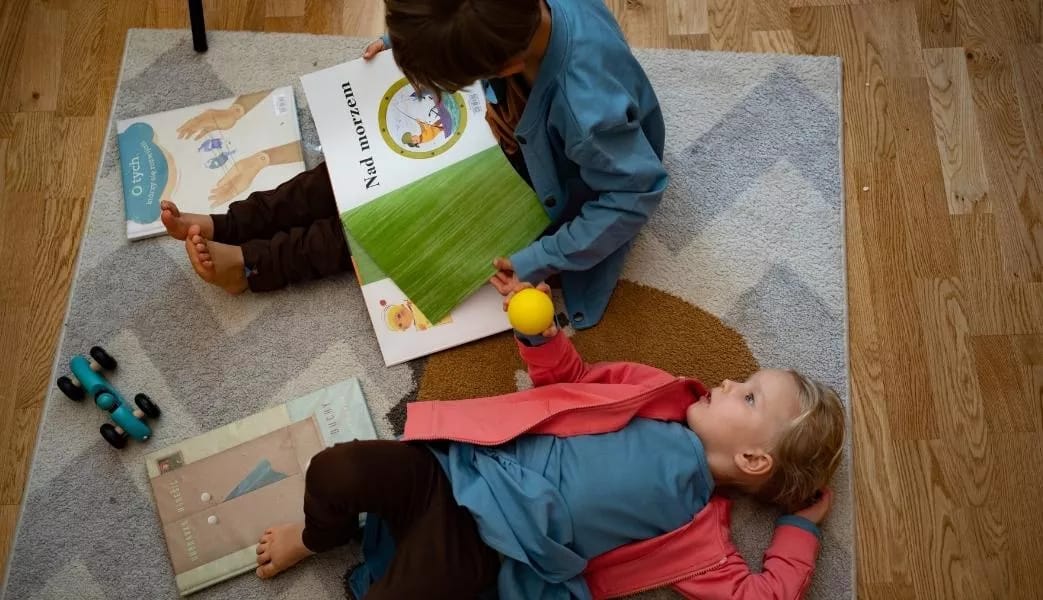
Maria Montessori, who lived from 1870 to 1952, was an Italian physician, anthropologist and educator. She worked with children for over 50 years. These were toddlers of different races, health conditions and financial statuses. As she herself said, it was thanks to them that a pioneering educational method of pedagogy was created, based on opposing the rigid school system in favour of the free development of children. "I studied the child, took what the child gave me and expressed it, and thus the method called the Montessori method was created." Dr M. Montessori.
What is the Montessori method?
- First and foremost, it focuses on the child and their needs, and on approaching them individually. Here, the child is the most important, treated warmly and with due respect;
- On allowing each child to develop at their own pace, adapted to their abilities. The educator "follows" the independent child, who eagerly develops their interests;
- On allowing each child to develop at their own pace, adapted to their abilities. The educator "follows" the independent child, who eagerly develops their interests;
- On teaching independence through support - children are allowed to act, e.g. setting the table, and are allowed to make mistakes and correct them;
- On allowing each child to develop at their own pace, adapted to their abilities. The educator "follows" the independent child, who eagerly develops their interests;
- Respect for others is one of the most important values of this idea.
Montessori in nursery and kindergarten
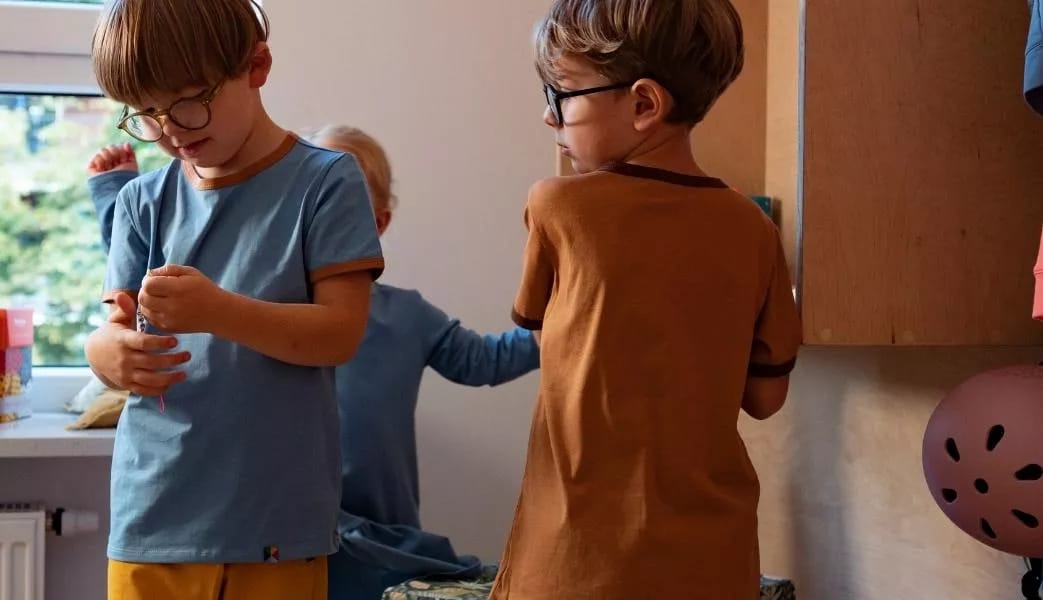
In the offer of many facilities, you can find information that they operate according to the "Montessori" approach. Such places are an alternative to traditional nurseries and kindergartens, and as long as the name "Montessori" is not just a marketing gimmick - they really do differ.
Montessori facilities - tasks of educators
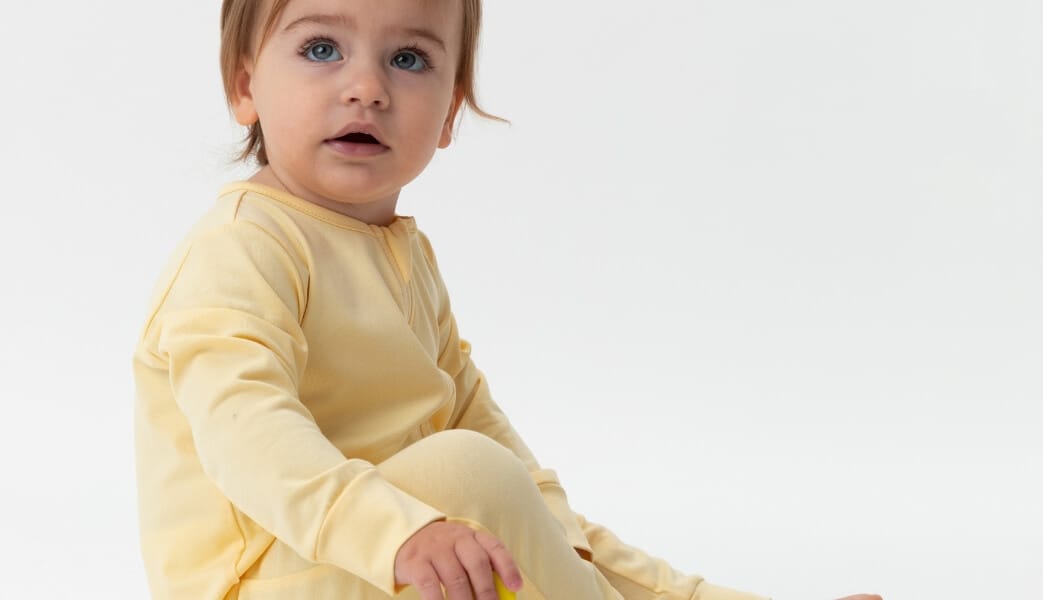
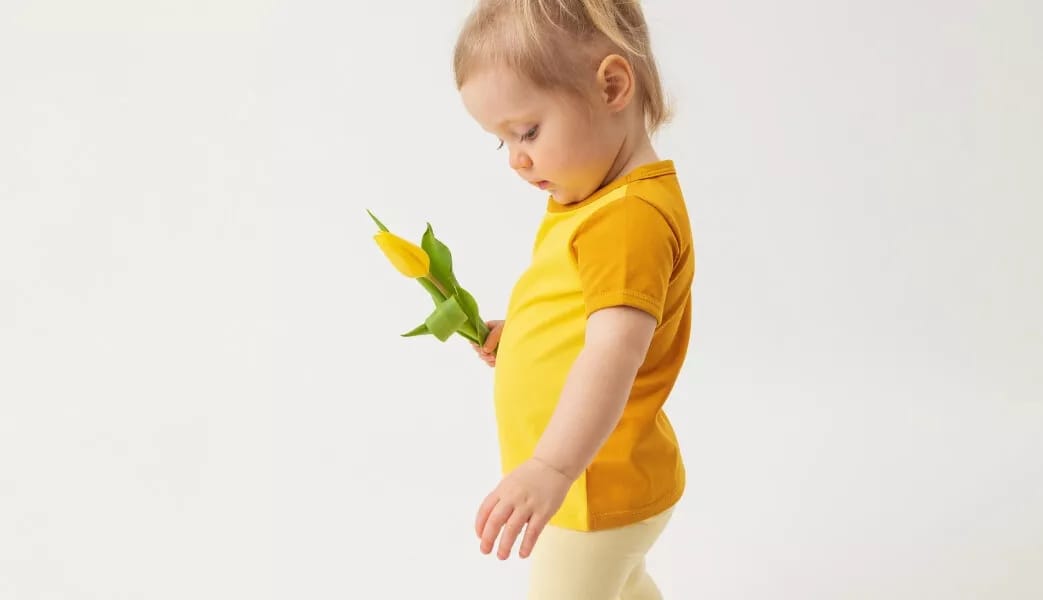
When it comes to teaching children in nurseries and kindergartens using this method, the most important task of educators is to provide children with peace and a sense of security. Only when feeling 100% safe can toddlers behave freely and develop their interests in a harmonious way, which is why teachers and carers focus on this. Parents who decide to send their child to a Montessori facility usually strongly support the idea and know that they themselves are the child's first educators. They can provide support to their child at every stage, including when the toddler is in nursery or kindergarten. Here, the child should feel comfortable and at ease, and parents should provide them with ideal conditions for exploring space and discovering the world. This may include, for example, comfortable clothing for the child, guaranteeing full freedom of movement and safe use. Such clothing can be found at the MyBasic shop.
Comfortable clothes support children's development
Every item of clothing should be comfortable for the child, as this guarantees freedom of movement, which is essential for exploration and play. It's not just the sweatshirt or shorts that must meet these requirements. Every element, from socks to underwear and accessories, must be well thought out and adapted to children. Colourful socks that are easy to put on because they have no patterns are also a great element that can be used when teaching a child to dress. Comfortable, colourful socks encourage further attempts at dressing independently. And this builds a sense of autonomy and independence.
Dressing independently, even just putting on socks, improves body awareness and coordination. For a child, dressing independently is a challenge, and they should be given the time and space to learn this. In preparation for this, you can create a Montessori-inspired wardrobe at home, which will make this task more enjoyable for both children and parents. Montessori pedagogy takes a holistic view of upbringing, and its implementation is not limited only to the time a child spends at the facility.
Environment supporting development
Apart from the approach itself, the elements of the environment, which should be prepared for such a preschooler, are also extremely important. These are meant to encourage learning and activity! Aesthetic, simple, functional, safe materials that are meant to support the child's development must be properly organised (easy to find) and within reach - so that the child can always reach for them and use them. Interestingly, each "teaching aid" is available here in only one copy, in order to teach children patience.
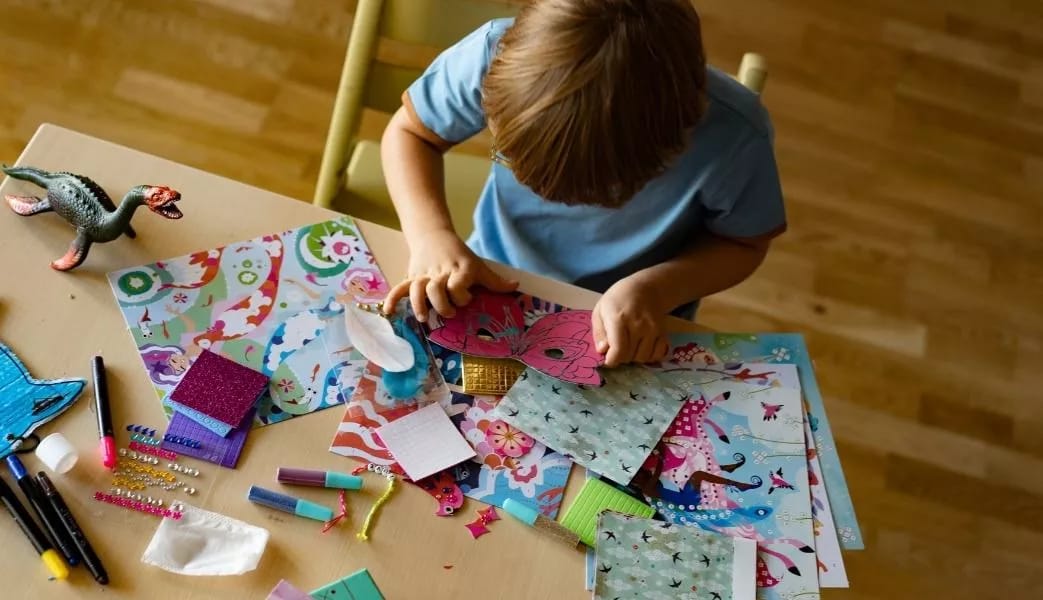
Free development, however, does not mean a lack of rules. In a Montessori kindergarten or nursery, children quickly learn that every item and activity has its place. Toys and teaching aids must be put back in their place, and at designated moments, attention must be focused and silence maintained. This is one of the reasons why special silence lessons are held, during which tasks are performed silently.
Apart from facilities created typically according to the Montessori idea, there are also places where only elements of this pedagogy are applied. Here, group educators conduct the aforementioned silence lessons, and they also have a set of appropriate accessories and materials that they use for activities with children on a designated day, e.g. every Monday.
In the Montessori approach, there is no division by age. A group may include children aged both 3 and 5. Toddlers observe and imitate, while older children learn responsibility. This is certainly a great educational value!
"Education should no longer be mostly about the transmission of knowledge, but must take a new path, seeking to release human potential." M. Montessori
Other posts from this category
.jpg)





Get EUR 10 off your order over EUR 100
By clicking „Sign up” I voluntarily agree to subscribe to the newsletter in order to receive marketing information, including promotions, discount codes, and the latest MyBasic products. I understand that I can withdraw my consent at any time. The controller of your personal data is MyBasic Sp. z o.o., ul. Rzędziana 11, 05-080 Izabelin B, KRS: 0000776465, NIP: 1182190916, REGON: 382808588, BDO: 000540511.