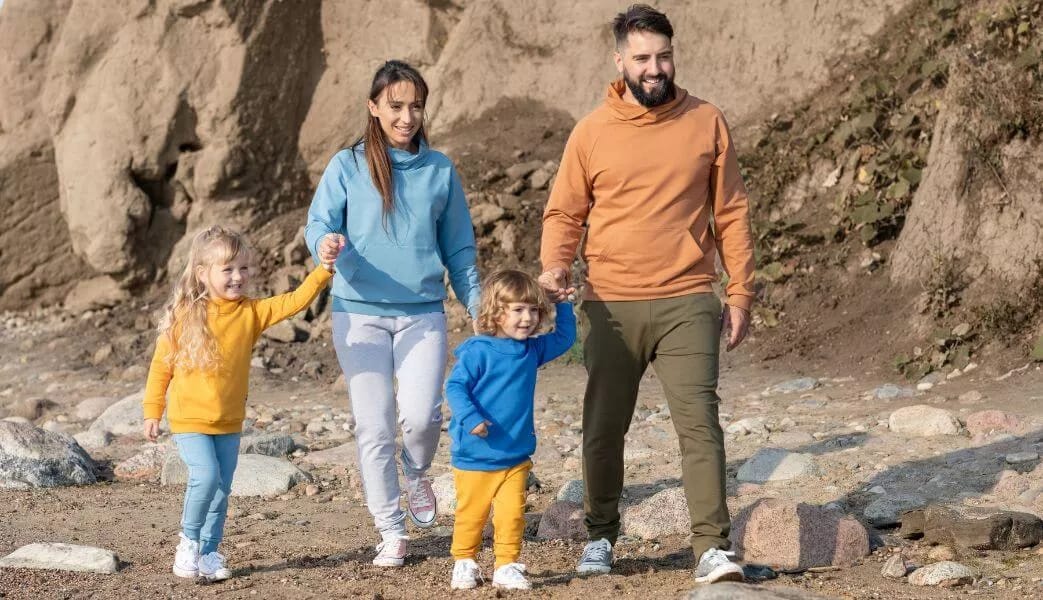
How to dress a child appropriately for the temperature is an issue that concerns new parents the most. There are plenty of people around eager to give advice, but unfortunately every piece of advice is different, and it's hard to find an answer. More experienced parents usually already have their own methods and are better at coping with dressing their child according to the temperature. However, there are a few simple rules that can help parents who still struggle with this.
How to dress a child depending on the temperature?
It's hard to find a golden rule saying that specific clothes should be worn during particular seasons. Seasons are not only characterised by different temperatures, but each of them can also feature varying conditions. We might have a warm day with temperatures reaching 15°C but a cold wind blowing, or conversely, a windless day with heavy rain. So the rule of how to dress a child depending on the temperature doesn't always work. It's worth assessing the outdoor conditions yourself and adjusting what you put on your child accordingly.
What to put on babies, and what on older children – clothing matched to temperature and age
The question of how to dress a child doesn't end with assessing outdoor conditions. It's much more important whether we're dressing a newborn, a baby, or a toddler. Each of them has different needs resulting from their age. Newborns and babies should be dressed more warmly than a two- or three-year-old. A well-known and often repeated rule for dressing a child according to temperature says that little ones should wear one more layer than adults have on. Of course, this assumes the adult feels thermally comfortable at the given moment. So there's no need to add extra layers or a down jacket for little ones if the parent is wearing a light spring jacket.
Baby clothes are also adapted to the seasons. An extra sweatshirt or jacket is enough if the parent is only wearing a sweatshirt. Older children, on the other hand, can be dressed similarly to yourself. However, this rule doesn't apply during heatwaves. If we ourselves spend time in one light T-shirt, we shouldn't put extra layers of clothing on children – even the youngest ones feel the effects of heat.
How to dress a child appropriately for the temperature – walks
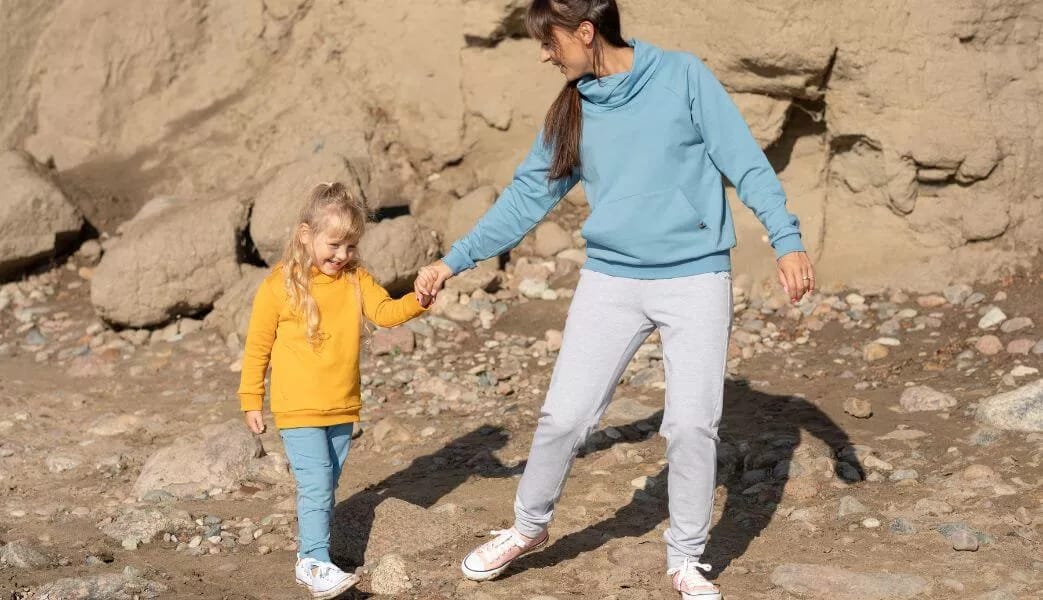
Mustard hooded sweatshirt with fleece lining, light blue reinforced trousers, light blue women's sweatshirt with a shawl collar and grey women's sweatpants
Babies and newborns – newborns indeed initially do not have a temperature regulation system as developed as older children, but they acquire it fairly quickly and are most often dressed too warmly. Parents, fearing the baby will get cold, put too many clothes on them, or choose outfits that are too thick for the current temperature.
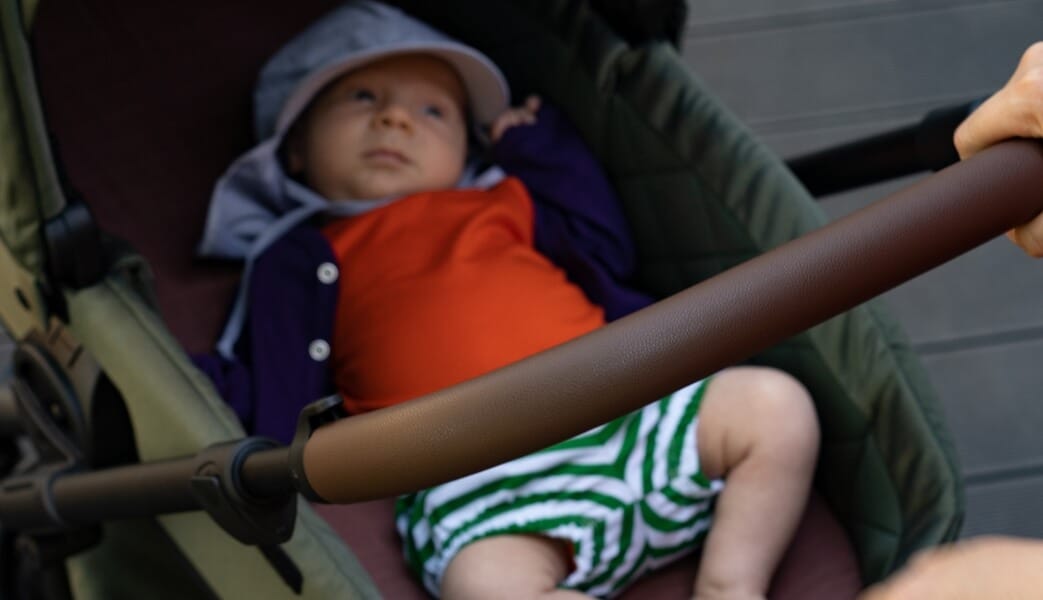
When dressing a baby, keep in mind that small children have a lower ability to lose heat through sweating, so they can overheat more easily than adults. During walks with them, it's also important to consider the fact that the baby is usually in a bassinet, which protects from wind and keeps a higher temperature than what the parent feels. This is important not only in winter or spring, but equally important in summer, when babies in strollers most often experience much higher temperatures. When it gets hot outside and the temperature rises above 30°C, it's better to skip the walk altogether and wait – the best times for walks with babies in summer, during heatwaves, are late morning hours and the afternoon period around 4-7pm.
- Babies and newborns - newborns indeed initially do not have a temperature regulation system as developed as older children, but they acquire it fairly quickly and are most often dressed too warmly. Parents, fearing the baby will get cold, put too many clothes on them, or choose outfits that are too thick for the current temperature. When dressing a baby, keep in mind that small children have a lower ability to lose heat through sweating, so they can overheat more easily than adults. During walks with them, it's also important to consider the fact that the baby is usually in a bassinet, which protects from wind and keeps a higher temperature than what the parent feels. This is important not only in winter or spring, but equally important in summer, when babies in strollers most often experience much higher temperatures. When it gets hot outside and the temperature rises above 30°C, it's better to skip the walk altogether and wait – the best times for walks with babies in summer, during heatwaves, are late morning hours and the afternoon period around 4-7pm.
- Toddlers - dressing older children is by no means easier than dressing babies. Toddlers require a lot of attention in this respect. Unlike babies, who spend most of their time lying in a stroller and therefore need to be wrapped up a bit more warmly, toddlers usually spend their walks being active. So the purpose of the walk should be taken into account and clothing adjusted accordingly. Children playing at the playground will very quickly become overheated if we dress them too warmly. It's also worth remembering that children are quicker to run and say they're too cold than too hot. Boys' clothing and girls' clothing should be matched to children's activity levels and take into account that with a lot of movement, children may feel even warmer than parents, who sit on a bench while the kids are having fun on the swings.
How to dress a child so as not to overheat or chill them – keep checking!
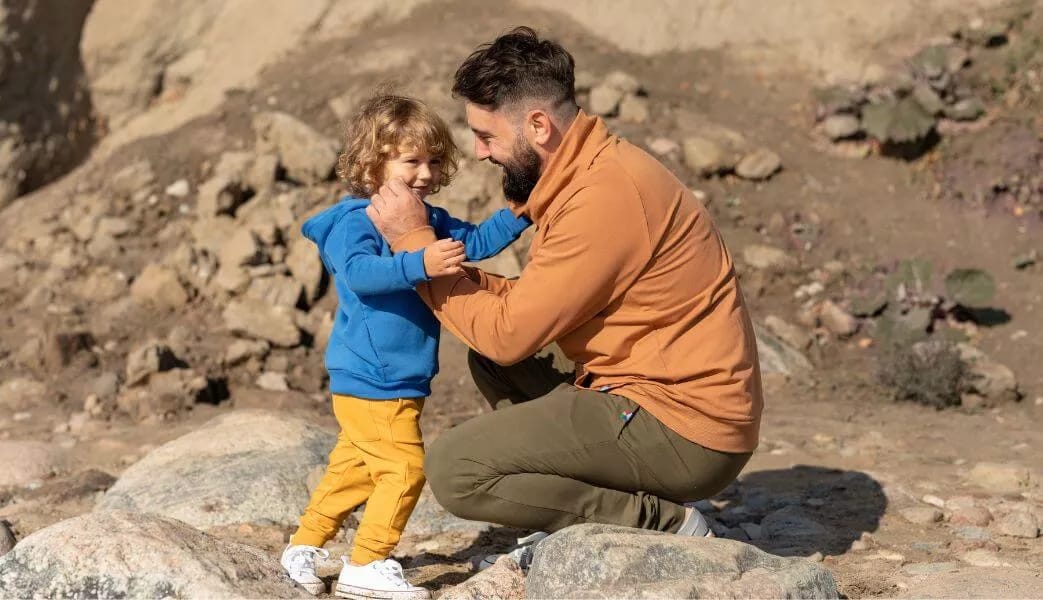
Blue hooded sweatshirt with fleece lining, mustard reinforced trousers, caramel men's sweatshirt with a shawl collar and khaki men's sweatpants
If in doubt about how to dress a child appropriately for the temperature, we need to check the child's body temperature on an ongoing basis. This can be done simply by checking the temperature at the back of the child's neck. The skin should be warm and dry. If a child has red, sweaty skin, it means they're too hot. We don't check a child's hands, because their temperature doesn't always objectively show whether the child is cold or hot. Sometimes colder hands don't necessarily mean the child is cold, and caring parents often put extra clothing on the child in this case. Monitoring the child during a walk will give us the best picture of whether they're warm and whether we've dressed them appropriately for the temperature.
Match clothing to the temperature by dressing your child in layers
Dressing in layers has several advantages that parents greatly appreciate. If in doubt about how to dress a child for the current temperature, it allows you to easily adjust the outfit to current needs. In the case of spring, when the weather is also changeable, this way of dressing works well. During this period, the weather can really surprise even adults. At a temperature of 15°-20°C, a baby can be dressed in a short-sleeved bodysuit and a cardigan or jumper. You can also add a baby bomber jacket on top. Also bring a blanket with you. It's not worth choosing thick sleepsuits during this period, as the baby may quickly overheat in them. An older child can be dressed at this temperature in a short-sleeved T-shirt topped with a zip-up sweatshirt, which allows better temperature control. A lighter jacket is also an option. Sweatpants work well with this too.
You might also be interested in: How to dress a newborn in summer? Clothing for walks and sleep
This might also be useful: How to dress a baby in autumn? Clothing for walks and at home
Other posts from this category
.jpg)

Get EUR 10 off your order over EUR 100
By clicking „Sign up” I voluntarily agree to subscribe to the newsletter in order to receive marketing information, including promotions, discount codes, and the latest MyBasic products. I understand that I can withdraw my consent at any time. The controller of your personal data is MyBasic Sp. z o.o., ul. Rzędziana 11, 05-080 Izabelin B, KRS: 0000776465, NIP: 1182190916, REGON: 382808588, BDO: 000540511.